
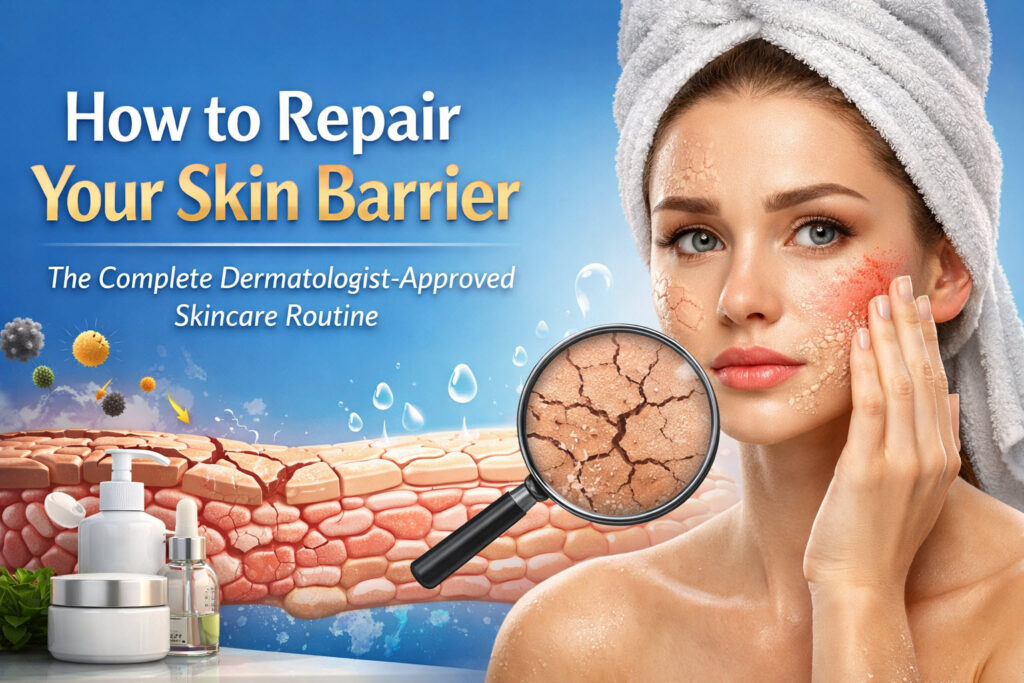
The Skin Barrier Repair Skincare Routine is one of the most searched skincare topics in 2025 as more people struggle with sensitive skin, damaged skin barrier, redness, dryness, and irritation caused by harsh skincare products, over-exfoliation, and environmental stress. A healthy skin barrier plays a critical role in protecting the skin from pollution, bacteria, and moisture loss. When the barrier becomes compromised, it can lead to inflammation, acne breakouts, dehydration, flaky skin, and increased sensitivity.
This comprehensive guide explains how to repair your skin barrier using a dermatologist-approved skincare routine designed to restore hydration, strengthen the skin’s natural defense system, and improve overall skin health. The routine focuses on gentle cleansing, hydrating serums, ceramide-rich moisturizers, and daily sunscreen protection, which are essential steps for rebuilding the protective layer of the skin.
Dermatologists recommend incorporating barrier-repair ingredients such as ceramides, hyaluronic acid, niacinamide, panthenol, glycerin, fatty acids, and cholesterol into your skincare routine. These powerful ingredients help restore the lipid matrix that holds skin cells together, allowing the skin to retain moisture and heal more efficiently. When used consistently, barrier-repair products can improve skin texture, elasticity, hydration levels, and resilience against environmental damage.
Many people unknowingly damage their skin barrier by using too many active ingredients like retinol, exfoliating acids (AHA/BHA), and harsh scrubs. While these ingredients can provide benefits, overuse can weaken the skin’s natural protection. A proper barrier-repair routine simplifies skincare and prioritizes soothing, hydrating, and repairing formulations that support the skin’s natural healing process.
In this dermatologist-approved guide, you will learn the best skincare routine for repairing a damaged skin barrier, the most effective ingredients for skin barrier repair, common causes of barrier damage, and expert tips to maintain healthy, glowing skin long-term. Whether your skin is dry, oily, acne-prone, or sensitive, following the right routine can help restore balance and achieve a stronger, healthier complexion.
If you are experiencing redness, tightness, irritation, flaky patches, or sensitivity, your skin barrier may be compromised. By implementing the right skincare steps and choosing products formulated with skin-repairing ingredients, you can rebuild the barrier and protect your skin from future damage while achieving smoother, hydrated, and radiant skin.
This skincare guide is perfect for anyone looking to improve their skincare routine, repair damaged skin, reduce sensitivity, and maintain long-term skin health using dermatologist-recommended techniques and products.
Table of Contents
Introduction: How to Repair Your Skin Barrier
Healthy skin begins with a strong and functional skin barrier. In dermatology, the skin barrier is often described as the body’s first line of defense against environmental damage, dehydration, and microbial invasion. When this protective layer is functioning properly, the skin appears smooth, hydrated, and resilient. However, when the barrier becomes compromised, the skin can quickly develop sensitivity, dryness, redness, and inflammation.
In recent years, dermatologists and skincare experts have increasingly emphasized the importance of barrier-repair skincare routines. Many common skin concerns—such as acne, rosacea, eczema, and chronic dryness—are often linked to a weakened skin barrier. Instead of focusing solely on aggressive treatments, modern skincare philosophy encourages strengthening the skin’s natural defense system.
A barrier-repair routine is not complicated. In fact, it typically involves simplifying your skincare regimen and prioritizing ingredients that restore hydration, replenish lipids, and calm inflammation. By following a structured routine that supports the skin’s natural healing process, it is possible to restore barrier integrity and improve overall skin health.
Understanding how the skin barrier works and how to repair it effectively can make a significant difference in both the appearance and resilience of your skin.
What Is the Skin Barrier and Why It Matters
The Structure of the Skin Barrier
The skin barrier resides in the outermost layer of the skin, known as the stratum corneum. This layer functions as a highly organized protective system composed of flattened skin cells surrounded by lipids. Dermatologists often compare this structure to a brick wall, where the skin cells represent the bricks and the lipids—primarily ceramides, cholesterol, and fatty acids—act as the mortar holding everything together.
This complex structure performs several vital functions that maintain skin health. One of its most important roles is preventing transepidermal water loss (TEWL), a process in which water evaporates from the skin. By sealing moisture within the skin layers, the barrier helps maintain proper hydration and elasticity.
The lipid matrix within the barrier also prevents harmful substances from penetrating the skin. Environmental pollutants, bacteria, allergens, and irritants are effectively blocked when the barrier is intact. Additionally, the barrier plays a role in regulating inflammation and supporting the skin’s immune defenses.
When this structure is disrupted, gaps form between the skin cells. These gaps allow moisture to escape and irritants to enter, leading to the common symptoms associated with barrier damage.
Key Functions of a Healthy Skin Barrier
A well-functioning skin barrier provides several benefits that extend beyond basic protection. One of the most noticeable effects is improved hydration. When the barrier retains moisture effectively, the skin appears plump, smooth, and youthful.
The barrier also plays a critical role in maintaining the skin’s microbiome. A balanced microbiome helps regulate inflammation and prevents harmful bacteria from proliferating. When the barrier is compromised, this delicate ecosystem can become disrupted, leading to increased sensitivity and breakouts.
Another important function of the barrier is maintaining the skin’s natural pH balance. Healthy skin typically has a slightly acidic pH, which supports enzymatic activity responsible for lipid production and cell turnover. When the barrier becomes damaged, the skin’s pH may shift, further impairing its ability to repair itself.
Because of these essential functions, maintaining barrier integrity should be a central focus of any effective skincare routine.
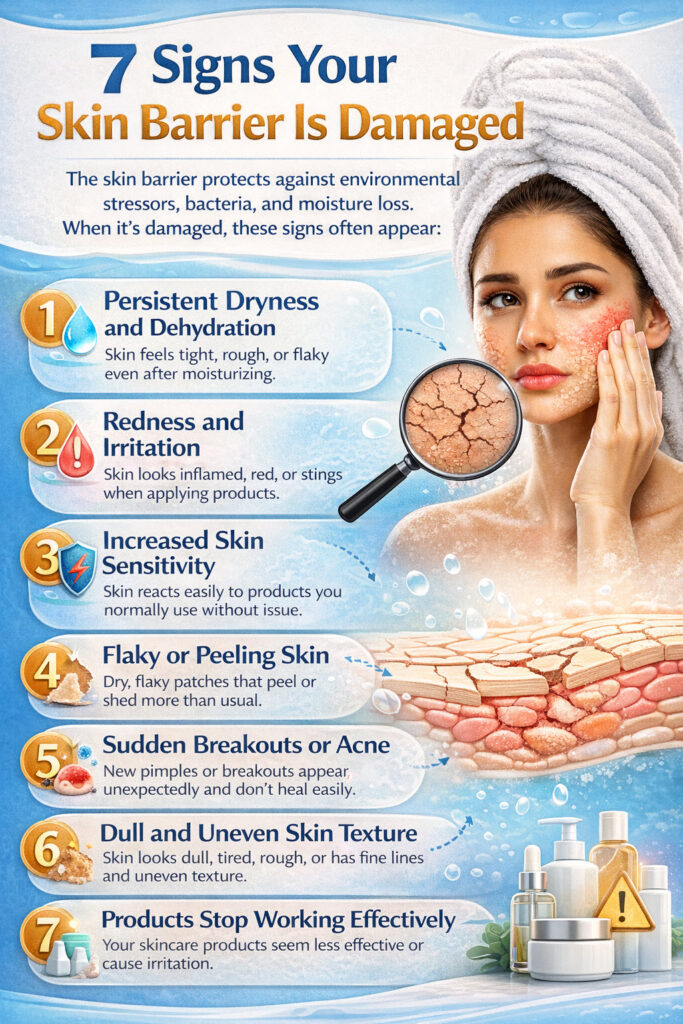
7 Signs Your Skin Barrier Is Damaged
The skin barrier plays a vital role in protecting your skin from environmental stressors, bacteria, and moisture loss. When this protective layer becomes weakened or damaged, the skin can no longer retain hydration or defend itself properly. As a result, several visible and uncomfortable symptoms begin to appear. Recognizing the early signs of a damaged skin barrier is important because timely care can help restore the skin’s health and prevent more serious skin problems. Below are seven common signs that indicate your skin barrier may be compromised.
1. Persistent Dryness and Dehydration
One of the most common signs of a damaged skin barrier is constant dryness, even after applying moisturizer. When the barrier is weakened, the skin loses its ability to retain water effectively. This process, known as transepidermal water loss (TEWL), causes moisture to escape from the skin. As a result, the skin may feel tight, rough, and uncomfortable throughout the day. People often notice that their usual moisturizers no longer provide lasting hydration, which indicates that the skin’s protective structure is not functioning properly.
2. Redness and Irritation
Inflammation and redness are clear warning signs that the skin barrier is compromised. When the protective layer becomes damaged, irritants from the environment can penetrate deeper into the skin. This triggers inflammation and leads to visible redness, particularly around the cheeks, nose, or chin. In some cases, the skin may also feel warm or tender to the touch. Persistent redness is often mistaken for sensitivity or rosacea, but it can actually be a result of barrier damage caused by over-exfoliation or harsh skincare products.
3. Increased Skin Sensitivity
If your skin suddenly starts reacting to products that you have used for years without problems, your skin barrier may be damaged. Increased sensitivity is a common symptom because the weakened barrier allows ingredients to penetrate deeper into the skin. This can lead to stinging, burning, or itching sensations when applying skincare products such as cleansers, serums, or moisturizers. Even mild formulations designed for sensitive skin may cause discomfort if the barrier is severely compromised.
4. Flaky or Peeling Skin
Another noticeable sign of barrier damage is flaky, peeling, or rough patches on the skin. When the barrier loses essential lipids and moisture, the outer layer of skin cells becomes dry and begins to shed unevenly. This can create a patchy texture that feels rough when touched. Flakiness often appears around the nose, mouth, or forehead and may worsen during colder weather or after using strong exfoliating treatments.
5. Sudden Breakouts or Acne
Many people are surprised to learn that a damaged skin barrier can actually contribute to acne breakouts. When the barrier is compromised, bacteria and pollutants can enter the skin more easily. At the same time, the skin may increase oil production in an attempt to compensate for lost moisture. This imbalance can lead to clogged pores, inflammation, and acne. If you are experiencing sudden breakouts despite maintaining a consistent skincare routine, barrier damage may be a contributing factor.
6. Dull and Uneven Skin Texture
Healthy skin typically looks smooth, hydrated, and radiant. However, when the barrier becomes damaged, the skin often appears dull, tired, and uneven. Without adequate moisture and lipid protection, the skin cannot maintain its natural glow. Fine lines may become more noticeable due to dehydration, and the overall texture may feel rough or bumpy. This lack of radiance is often a sign that the skin barrier is struggling to retain hydration and repair itself.
7. Products Stop Working Effectively
Another subtle but important sign of barrier damage is when your skincare products suddenly stop delivering results. Even high-quality products may not work properly if the skin barrier is compromised. Because the barrier regulates how ingredients interact with the skin, damage to this layer can disrupt absorption and effectiveness. Instead of improving skin health, some products may start causing irritation or redness.
Major Causes of Skin Barrier Damage
Overuse of Active Ingredients
The widespread popularity of potent skincare ingredients has unintentionally contributed to a rise in barrier damage. Exfoliating acids such as alpha hydroxy acids (AHAs) and beta hydroxy acids (BHAs) are commonly used to improve skin texture and brightness. While effective when used appropriately, excessive exfoliation can strip the skin of essential lipids.
Retinoids, another widely used class of ingredients, may also cause temporary barrier disruption. Although these compounds stimulate collagen production and improve skin tone, they can initially thin the outer layer of the skin and increase sensitivity.
Combining multiple active ingredients within a single routine further increases the risk of irritation. Dermatologists often recommend reducing the use of actives or temporarily discontinuing them when signs of barrier damage appear.
Environmental and Lifestyle Stressors
External factors can also contribute significantly to barrier deterioration. Exposure to pollution introduces free radicals that damage the lipids responsible for maintaining barrier integrity. Urban environments with high levels of air pollution are particularly challenging for skin health.
Climate conditions play an important role as well. Cold temperatures and low humidity levels can strip moisture from the skin, while excessive heat may disrupt the lipid matrix.
Daily habits also influence barrier health. Frequent hot showers, aggressive cleansing, and the use of harsh soaps can remove natural oils that are essential for maintaining barrier function. Stress and lack of sleep may further impair the skin’s ability to repair itself efficiently.
The Science of Skin Barrier Repair
Role of Lipids and Ceramides
Successful barrier repair focuses on replenishing the lipids that hold the skin cells together. Among these lipids, ceramides play a particularly important role. Research suggests that ceramides account for nearly half of the lipid content within the stratum corneum.
When ceramide levels decrease, the skin becomes more permeable and prone to water loss. Topical skincare products containing ceramides can help restore the lipid balance, improving the skin’s ability to retain moisture and resist irritation.
Cholesterol and fatty acids are equally important components. When combined in appropriate ratios, these lipids mimic the natural structure of healthy skin, allowing the barrier to rebuild more effectively.
Importance of Hydration and Moisture Retention
While lipid replenishment strengthens the structural integrity of the barrier, hydration is necessary to support the repair process. Hydrating ingredients such as glycerin and hyaluronic acid draw water into the skin, creating an environment conducive to cellular regeneration.
However, hydration alone is not sufficient. Without occlusive ingredients to seal the moisture within the skin, water will quickly evaporate. Effective barrier-repair routines therefore combine humectants, emollients, and occlusives to achieve optimal results.
This balanced approach allows the skin to regain both hydration and structural resilience.
Essential Ingredients for Barrier Repair
Ceramides, Fatty Acids, and Cholesterol
These lipid components form the foundation of barrier-repair skincare products. Ceramide-rich moisturizers help fill the gaps between skin cells, restoring the protective seal that prevents moisture loss.
Fatty acids and cholesterol complement ceramides by reinforcing the lipid matrix. Together, these ingredients replicate the natural composition of healthy skin and support the rebuilding process.
Hydrating Humectants
Humectants play a critical role in attracting water to the skin. Ingredients such as hyaluronic acid, glycerin, and sodium PCA are widely recognized for their exceptional hydrating properties.
When used consistently, these ingredients improve skin elasticity and smoothness while reducing the appearance of dryness and roughness.
Soothing and Anti-Inflammatory Compounds
Barrier repair often requires calming irritated skin. Ingredients like niacinamide, panthenol, allantoin, and centella asiatica help reduce inflammation and support the healing process.
Niacinamide is particularly beneficial because it stimulates ceramide production while simultaneously improving skin tone and reducing redness.
Step-by-Step Barrier-Repair Skincare Routine
Step 1 – Gentle Cleansing
A mild cleanser designed for sensitive skin should be used to remove impurities without stripping essential oils. Cleansing twice daily is generally sufficient for maintaining hygiene without disrupting the barrier.
Step 2 – Hydration Layer
Applying a hydrating toner or essence immediately after cleansing replenishes moisture and prepares the skin to absorb subsequent products more effectively.
Step 3 – Targeted Repair Serums
Serums containing hydrating and soothing ingredients can deliver concentrated support to damaged skin. These formulations penetrate deeper layers and accelerate recovery.
Step 4 – Protective Moisturizer
A barrier-strengthening moisturizer seals in hydration and replenishes lost lipids. Rich formulations containing ceramides and fatty acids are particularly beneficial during the repair phase.
Step 5 – Daily Sun Protection
Broad-spectrum sunscreen is essential for protecting healing skin from ultraviolet radiation, which can weaken the barrier and delay recovery.
Dermatologist Tips for Repairing Your Skin Barrier
Dermatologists emphasize that repairing the skin barrier requires patience, consistency, and a simplified skincare routine. Many skin problems occur because people unknowingly use too many active ingredients or harsh treatments that weaken the skin’s natural protective layer. Following expert advice can help speed up recovery and prevent long-term damage.
1. Simplify Your Skincare Routine
One of the most important recommendations dermatologists make is to simplify your skincare routine. When your skin barrier is damaged, using too many products can overwhelm the skin and worsen irritation. Focus on the essentials: a gentle cleanser, a hydrating serum, a ceramide-rich moisturizer, and sunscreen.
2. Focus on Barrier-Repair Ingredients
Dermatologists frequently recommend ingredients such as ceramides, niacinamide, hyaluronic acid, glycerin, and panthenol. These ingredients help rebuild the skin’s lipid layer, restore hydration, and reduce inflammation. Using products that contain these ingredients regularly can significantly improve barrier function.
3. Always Apply Moisturizer on Damp Skin
Applying moisturizer immediately after cleansing helps lock in hydration. Damp skin absorbs moisture more effectively, allowing the moisturizer to seal water into the skin and prevent dehydration.
4. Protect Your Skin with Daily Sunscreen
Ultraviolet (UV) exposure weakens the skin barrier and delays healing. Dermatologists strongly recommend applying a broad-spectrum sunscreen with SPF 30 or higher every morning to protect the skin from further damage.
5. Introduce Active Ingredients Slowly
Once your skin barrier has recovered, active ingredients such as retinol or exfoliating acids should be reintroduced gradually. Dermatologists suggest using these products only once or twice per week initially to avoid damaging the barrier again.
Common Mistakes That Damage the Skin Barrier
Many people unintentionally harm their skin barrier by following skincare trends or using products incorrectly. Avoiding these common mistakes can help protect your skin and maintain long-term skin health.
1. Over-Exfoliating the Skin
Using chemical exfoliants like AHAs and BHAs too frequently can strip the skin of essential lipids. Exfoliating more than two or three times per week may lead to dryness, irritation, and barrier damage.
2. Using Too Many Active Ingredients Together
Combining powerful ingredients such as retinol, vitamin C, and exfoliating acids in the same routine can overload the skin. This often leads to redness, sensitivity, and inflammation.
3. Washing Your Face Too Frequently
Cleansing the skin more than twice a day can remove natural oils that are essential for maintaining the barrier. Over-cleansing can make the skin dry, tight, and vulnerable to irritation.
4. Using Harsh Cleansers or Scrubs
Foaming cleansers with sulfates and physical scrubs with rough particles can damage the outer layer of the skin. Gentle, non-stripping cleansers are a better option for maintaining barrier health.
5. Skipping Moisturizer
Some people believe that moisturizer is unnecessary for oily or acne-prone skin. In reality, all skin types need hydration. Without moisturizer, the skin barrier becomes weak and prone to irritation.
Who Should NOT Use This Routine?
Although a barrier-repair skincare routine is generally safe and beneficial for most people, there are certain situations where individuals should consult a dermatologist before following it.
1. People with Severe Skin Conditions
Individuals with severe skin disorders such as eczema, psoriasis, or chronic dermatitis may require specialized treatment plans prescribed by a dermatologist rather than a standard skincare routine.
2. Individuals Using Prescription Skin Treatments
People who are currently using prescription medications such as strong retinoids, isotretinoin, or medical-grade chemical peels should follow the instructions provided by their dermatologist. Adding new skincare products without medical guidance could interfere with treatment.
3. People with Known Ingredient Allergies
Some individuals may have allergies to certain skincare ingredients, including fragrances, preservatives, or botanical extracts. It is important to review ingredient lists carefully and perform a patch test before using new products.
4. Those Recovering from Dermatological Procedures
People who have recently undergone procedures such as laser treatments, microneedling, or chemical peels should follow the aftercare instructions provided by their dermatologist rather than starting a new routine immediately.
5. Individuals with Extremely Sensitive Skin
If your skin reacts easily to most products, it is best to consult a dermatologist before introducing new ingredients, even those designed for barrier repair.
Ingredients and Practices to Avoid During Barrier Repair
While repairing the skin barrier, it is advisable to avoid harsh exfoliants, strong retinoids, alcohol-based products, and heavily fragranced formulations. Simplifying the routine and focusing on gentle care allows the skin to recover more efficiently.
How Long Skin Barrier Recovery Takes
The skin barrier typically requires two to four weeks to show noticeable improvement with consistent care. More severe damage may take longer depending on individual skin conditions and environmental factors.
Long-Term Strategies for Maintaining a Healthy Skin Barrier
Maintaining barrier health requires consistency and moderation. Limiting excessive exfoliation, using sunscreen daily, and prioritizing hydration are essential habits for preserving skin resilience.
A balanced skincare routine that supports the skin’s natural functions will help prevent future barrier damage.
Medical Disclaimer
The information provided in this article is intended for educational and informational purposes only and should not be considered medical advice, diagnosis, or treatment. While the content is based on widely accepted skincare knowledge and dermatological research, it is not a substitute for professional medical guidance.
Every individual’s skin is different, and skincare routines or ingredients that work for one person may not be suitable for another. If you are experiencing severe skin irritation, persistent redness, allergic reactions, eczema, psoriasis, or other medical skin conditions, it is strongly recommended that you consult a qualified dermatologist or licensed healthcare professional before starting any new skincare routine or using new products.
The use of any skincare products, treatments, or remedies mentioned in this content is at your own discretion and risk. Always perform a patch test before applying new skincare products to your face or body to check for potential allergic reactions or sensitivities.
The author and publisher of this content, including Kmatee Skincare Solutions, do not assume responsibility for any adverse reactions, side effects, or damages that may occur from the use or misuse of the information provided. Always seek professional medical advice for personalized skincare recommendations and treatment plans.
Conclusion
The skin barrier is fundamental to overall skin health and resilience. When compromised, the skin becomes vulnerable to dehydration, irritation, and environmental damage. By adopting a barrier-repair skincare routine centered on gentle cleansing, deep hydration, lipid replenishment, and sun protection, it is possible to restore the skin’s protective structure.
Consistency and simplicity remain the key principles of effective barrier repair. With the right ingredients and habits, the skin can gradually regain its strength, balance, and natural radiance.
FAQs
1. Can a damaged skin barrier heal naturally?
Yes. With proper care and minimal irritation, the skin has a remarkable ability to repair itself over time.
2. Is moisturizer enough to repair the skin barrier?
Moisturizer plays a crucial role, but optimal repair also requires hydration, soothing ingredients, and sun protection.
3. Can exfoliation be used during barrier repair?
It is generally recommended to avoid exfoliation until the skin barrier has fully recovered.
4. Does drinking water improve the skin barrier?
Adequate hydration supports overall skin health, but topical skincare products are essential for repairing the barrier structure.
5. How often should sunscreen be applied during barrier repair?
Sunscreen should be applied every morning and reapplied every two hours during prolonged sun exposure.