
Vitamin C Brightening Serum has become one of the most searched skincare products worldwide because of its powerful ability to transform dull skin into a radiant and healthy glow. In today’s modern skincare routine, Vitamin C serum for glowing skin is considered an essential product that helps brighten complexion, reduce dark spots, and protect the skin from environmental damage. This powerful antioxidant works deep within the skin to fight free radicals, improve collagen production, and restore a youthful appearance.
If you are looking for the best vitamin C serum for glowing skin, understanding its benefits and proper usage is extremely important. A high-quality Vitamin C brightening serum can visibly improve uneven skin tone, fade hyperpigmentation, reduce acne marks, and boost overall skin radiance. Dermatologists often recommend vitamin C serum because it supports natural collagen synthesis, which helps reduce fine lines and wrinkles while making the skin smoother and firmer.
✅ Pro Tip:
If you are introducing Vitamin C Brightening Serum into your routine for the first time, start by using it 3–4 times per week, then gradually increase to daily use as your skin adapts.
One of the biggest reasons behind the popularity of Vitamin C serum skincare routine is its ability to deliver multiple benefits in a single product. It acts as a brightening agent, anti-aging treatment, antioxidant shield, and skin repair booster. Regular use of a vitamin C face serum can significantly improve skin texture, hydration levels, and brightness, making your complexion look healthier and more youthful.
Another major benefit of using a vitamin C serum for dark spots and pigmentation is its ability to slow down melanin production. This process helps lighten stubborn pigmentation caused by sun damage, acne scars, and aging. Over time, your skin tone becomes more even, brighter, and smoother.
Modern skincare experts also emphasize the importance of using vitamin C serum with sunscreen during the daytime. When combined with sun protection, vitamin C creates a powerful defense against UV damage and pollution. This combination helps prevent premature aging while maintaining naturally glowing skin.
For people with dull, tired, or uneven skin, adding a vitamin C brightening serum to your skincare routine can be a game changer. Whether you have oily, dry, or sensitive skin, there are different formulations available that suit every skin type. Choosing a high-quality serum with the right ingredients like hyaluronic acid, ferulic acid, and vitamin E can enhance the effectiveness of vitamin C and deliver even better results.
If you want clear, radiant, and youthful skin, understanding the benefits, uses, and secrets of vitamin C brightening serum can help you unlock the true potential of this powerful skincare ingredient.
Table of Contents
Introduction: Vitamin C Brightening Serum
Healthy, radiant skin is something almost everyone dreams of. Walk through any beauty store or scroll through skincare TikTok, and you’ll see one ingredient dominating the conversation Vitamin C. From dermatologists to beauty influencers, people are talking about its ability to brighten dull skin, reduce dark spots, and even slow visible aging. But what exactly makes Vitamin C brightening serum so powerful? And why has it become a must-have in skincare routines worldwide?
The popularity of vitamin C skincare products has exploded in recent years. According to industry reports, the global vitamin C skincare market was valued at about $4.7 billion in 2025 and is expected to reach $12.4 billion by 2035, showing strong long-term demand for brightening and anti-aging solutions. This growth reflects a shift in how people approach skincare. Instead of covering imperfections with makeup, consumers want products that actually improve skin health.
Vitamin C brightening serum sits at the center of this movement. Unlike traditional creams, serums deliver concentrated active ingredients directly into the skin. Think of them like a nutrient packed smoothie for your face lightweight, fast absorbing, and loaded with benefits.
In this detailed guide, we’ll explore everything you need to know about vitamin C brightening serums from how they work and why they’re effective to how you can choose the perfect one for your skin type.
What Is Vitamin C Brightening Serum?
A Vitamin C brightening serum is a skincare product formulated with concentrated vitamin C to improve skin tone, reduce pigmentation, and protect the skin from environmental damage. Unlike heavier moisturizers or creams, serums have a thin, lightweight consistency that allows them to penetrate deeper into the skin. This deeper absorption makes them incredibly effective for delivering powerful active ingredients where they’re needed most.
Vitamin C itself is a well-known antioxidant that plays an essential role in skin health. When applied topically, it neutralizes free radicals—unstable molecules that damage skin cells and accelerate aging. Pollution, UV radiation, and environmental toxins constantly produce these harmful molecules. Over time, they contribute to dullness, wrinkles, and uneven pigmentation. Vitamin C works like a protective shield, helping the skin defend itself against these aggressors.
Understanding Vitamin C in Skincare
In skincare science, vitamin C is celebrated for its multifunctional benefits. It doesn’t just brighten the skin; it also helps boost collagen production and reduce inflammation. Collagen is the protein responsible for skin firmness and elasticity. As we age, collagen production naturally slows down, leading to wrinkles and sagging. Vitamin C helps stimulate collagen synthesis, which keeps the skin looking youthful and firm.
Another key benefit is its ability to inhibit melanin production. Melanin is the pigment responsible for dark spots and uneven skin tone. By slowing down melanin formation, vitamin C gradually fades hyperpigmentation and creates a brighter complexion.
Why Serums Work Better Than Creams
Serums are often considered the most powerful step in a skincare routine because of their high concentration of active ingredients. Creams typically contain larger molecules and thicker formulations designed mainly for hydration. Serums, on the other hand, are formulated with smaller molecules that penetrate deeper layers of the skin.
This difference means you can deliver potent ingredients like vitamin C directly to the cells where they can make the most impact. It’s like the difference between watering a plant’s leaves versus watering its roots the latter provides deeper nourishment.
Before & After Usage Guide (Vitamin C Brightening Serum)
| Time Period | Skin Condition | What Happens on the Skin | Recommended Routine |
|---|---|---|---|
| Before Use | Dull skin, uneven tone, dark spots, dehydration | Skin may appear tired due to pollution, UV exposure, and reduced collagen production | Cleanse skin properly and start with a mild vitamin C concentration (10%) |
| Week 1 – Week 2 | Skin adjusting to new active ingredient | Skin may feel smoother and slightly brighter; mild tingling can occur as skin adapts | Apply 2–3 drops daily after cleansing and follow with moisturizer |
| Week 3 – Week 4 | Early visible improvements | Skin brightness improves and early fading of dark spots may start | Continue daily use and apply sunscreen every morning |
| Week 5 – Week 8 | Noticeable skin improvement | Hyperpigmentation begins to fade and skin tone looks more even | Maintain consistent skincare routine and avoid harsh exfoliants |
| After 2 – 3 Months | Long-term benefits appear | Skin looks radiant, smoother, firmer, and healthier with reduced fine lines | Continue vitamin C use with sunscreen and hydrating skincare |
Vitamin C Brightening Serum Comparison Table
| Feature | Vitamin C Brightening Serum | Regular Face Moisturizer | Whitening Cream |
|---|---|---|---|
| Primary Purpose | Brightens skin and reduces dark spots | Hydrates and nourishes skin | Lightens skin tone temporarily |
| Active Ingredients | Vitamin C, Ferulic Acid, Vitamin E, Hyaluronic Acid | Oils, humectants, emollients | Chemical brightening agents |
| Skin Benefits | Improves brightness, boosts collagen, protects from free radicals | Prevents dryness and maintains skin barrier | Provides short-term skin lightening |
| Absorption Level | Deep skin penetration | Mostly works on outer skin layer | Surface-level action |
| Best Time to Use | Morning skincare routine | Day and night | Usually night routine |
| Long-Term Results | Improves overall skin health and radiance | Maintains hydration | Results vary and may not address skin health |
| Dermatologist Recommendation | Highly recommended antioxidant skincare ingredient | Recommended for hydration | Depends on formulation and skin type |
Vitamin C Serum Before vs After Skin Results
| Skin Concern | Before Using Vitamin C Serum | After Regular Use |
|---|---|---|
| Skin Brightness | Dull and tired appearance | Brighter and radiant complexion |
| Dark Spots | Visible pigmentation and acne marks | Gradually fades with consistent use |
| Skin Texture | Rough or uneven surface | Smoother and softer skin |
| Fine Lines | Early wrinkles may appear | Skin looks firmer due to collagen support |
| Overall Glow | Skin looks flat and lifeless | Healthy, glowing skin |
Why Vitamin C Serum Is Trending Worldwide
Vitamin C serum isn’t just another beauty trend; it’s a skincare revolution driven by scientific research, consumer awareness, and social media influence.
Market Growth and Consumer Demand
The skincare industry has experienced massive growth, particularly in the active ingredient skincare category. The vitamin C serum market alone was valued at around $1.35 billion in 2024 and is projected to reach $2.10 billion by 2030, growing steadily each year.
Several factors are fueling this growth:
- Increasing awareness of skin damage caused by pollution and UV exposure
- Rising demand for anti aging solutions
- Popularity of clean beauty and science backed skincare
Consumers are no longer satisfied with basic moisturizers. They want products that deliver visible results, and vitamin C serums promise exactly that.
Key Benefits of Vitamin C Brightening Serum
Vitamin C serums are loved because they tackle multiple skin problems at once. Instead of using several products, one well-formulated serum can address brightness, aging, and environmental protection.
Brightens Dull Skin
Dull skin is often caused by accumulated dead cells, environmental damage, and reduced cell turnover. Vitamin C helps accelerate skin renewal, revealing fresher and brighter skin underneath. Think of it as turning on a light bulb for your complexion.
With regular use, the skin appears more radiant and healthy. Many people notice that their complexion looks more vibrant even without makeup.
Reduces Dark Spots and Hyperpigmentation
Hyperpigmentation is one of the most common skincare concerns worldwide. Dark spots, sunspots, and acne scars can linger on the skin for months or even years.
Vitamin C works by blocking the enzyme tyrosinase, which is responsible for melanin production. When melanin production slows down, dark spots gradually fade, and the skin tone becomes more even.
Boosts Collagen Production
Collagen is essential for youthful-looking skin. As we age, collagen levels decline, leading to fine lines and wrinkles.
Vitamin C stimulates collagen synthesis, helping maintain firm, plump, and elastic skin. Over time, this can reduce the appearance of wrinkles and improve overall skin texture.
Protects Against Environmental Damage
Environmental stressors such as pollution and UV radiation generate free radicals that damage skin cells. Vitamin C is a powerful antioxidant, meaning it neutralizes these harmful molecules before they can cause damage.
This protective effect helps prevent premature aging and keeps the skin healthier over the long term.
Vitamin C Serum Ingredients & Their Benefits
| Ingredient | Ingredient Type | Main Skin Benefits | Why It Is Used in Vitamin C Serum |
|---|---|---|---|
| L-Ascorbic Acid | Pure Vitamin C | Brightens skin, boosts collagen production, reduces dark spots, fights free radicals | Most powerful and effective form of vitamin C used for skin brightening |
| Sodium Ascorbyl Phosphate | Vitamin C Derivative | Helps reduce acne, improves skin brightness, protects against environmental damage | More stable and gentler alternative to pure vitamin C |
| Ascorbyl Glucoside | Stable Vitamin C Derivative | Improves skin tone, fades pigmentation, enhances radiance | Water-soluble form that converts into vitamin C after absorption |
| Tetrahexyldecyl Ascorbate | Oil-Soluble Vitamin C | Penetrates deeper into skin, improves elasticity, reduces signs of aging | Highly stable vitamin C form used in premium skincare formulations |
| Hyaluronic Acid | Humectant | Hydrates skin, improves moisture retention, plumps fine lines | Helps prevent dryness and supports smooth skin texture |
| Vitamin E (Tocopherol) | Antioxidant | Protects skin barrier, improves hydration, enhances antioxidant protection | Works synergistically with vitamin C to strengthen skin protection |
| Ferulic Acid | Antioxidant Stabilizer | Increases effectiveness of vitamin C, reduces oxidative stress | Helps stabilize vitamin C and extend product shelf life |
| Niacinamide (Vitamin B3) | Skin Brightening Agent | Improves skin texture, reduces redness, minimizes pores | Enhances brightening effect and supports skin barrier |
| Panthenol (Pro-Vitamin B5) | Skin Soothing Agent | Calms irritation, hydrates skin, supports barrier repair | Helps reduce potential irritation from active ingredients |
| Glycerin | Humectant | Attracts moisture to skin, prevents dryness | Maintains hydration and improves serum absorption |
✅ Pro Tip:
High-quality Vitamin C Brightening Serums often combine Vitamin C + Vitamin E + Ferulic Acid because this combination can increase antioxidant effectiveness and stability.
How Vitamin C Brightening Serum Works on Skin
When applied to the skin, vitamin C penetrates the outer layer and begins interacting with skin cells. It works through several biological mechanisms that improve skin health.
First, it acts as a powerful antioxidant, neutralizing free radicals before they can damage collagen and elastin fibers. This helps prevent signs of premature aging.
Second, vitamin C stimulates fibroblast cells to produce collagen. Over time, this strengthens the skin structure and improves elasticity.
Third, it reduces melanin production, gradually fading dark spots and discoloration. This process creates a more even and radiant complexion.
Because of these multiple actions, vitamin C serum functions as both a protective and corrective skincare treatment.
Vitamin C Serum Concentration Guide
| Vitamin C Concentration | Best For | Skin Benefits | Skin Type Recommendation | Usage Advice |
|---|---|---|---|---|
| 5% Vitamin C | Beginners and sensitive skin users | Provides mild skin brightening, improves skin tone gradually, helps protect against environmental damage | Sensitive skin, dry skin, or first-time vitamin C users | Use once daily to allow the skin to adjust to vitamin C |
| 10% Vitamin C | Daily skincare routine | Improves skin brightness, reduces dullness, supports collagen production, helps fade minor pigmentation | Normal skin, combination skin | Ideal for everyday use in morning skincare routine |
| 15% Vitamin C | Targeting dark spots and uneven skin tone | Strong brightening effect, reduces hyperpigmentation, improves skin texture and radiance | Normal to oily skin types | Use regularly with moisturizer and sunscreen for best results |
| 20% Vitamin C | Advanced anti-aging skincare | Maximum antioxidant protection, boosts collagen production, reduces visible fine lines and stubborn pigmentation | Experienced users with tolerant skin | Start slowly (3–4 times per week) to avoid irritation |
Key Tips When Choosing Vitamin C Concentration
| Tip | Explanation |
|---|---|
| Start Low and Increase Gradually | Beginners should start with 5% or 10% vitamin C and increase concentration slowly as the skin adapts. |
| Higher Concentration Is Not Always Better | Very high concentrations can sometimes cause irritation without providing significantly better results. |
| Always Use Sunscreen | Vitamin C works best when combined with broad-spectrum sunscreen during daytime use. |
| Check Skin Reaction | If redness, irritation, or tingling occurs, reduce frequency or choose a lower concentration. |
✅ Expert Tip:
Dermatologists often recommend 10%–15% vitamin C serum as the optimal concentration range because it balances effectiveness and skin tolerance.
How to Choose the Best Vitamin C Serum
Choosing the right vitamin C serum can be confusing because there are hundreds of options available. However, a few key factors can help you identify a high-quality product.
Ideal Vitamin C Percentage
Most dermatologists recommend vitamin C concentrations between 10% and 20%. This range provides effective results without causing excessive irritation. Research shows that serums within this concentration range dominate the market because they balance potency with safety.
Beginners may start with lower concentrations (around 10%), while experienced users may benefit from stronger formulations.
Ingredients That Boost Effectiveness
Some ingredients enhance the effectiveness of vitamin C and improve its stability.
Common combinations include:
- Vitamin E – boosts antioxidant protection
- Ferulic acid – stabilizes vitamin C and enhances absorption
- Hyaluronic acid – hydrates and plumps the skin
- Niacinamide – brightens and strengthens the skin barrier
These combinations often create synergistic effects, making the serum more powerful.
How to Use Vitamin C Serum Correctly
Using vitamin C serum properly is essential for achieving the best results.
Step-by-Step Application Routine
- Cleanse your face with a gentle cleanser.
- Apply a toner if part of your routine.
- Place 2–3 drops of vitamin C serum on your fingertips.
- Gently press the serum into your skin.
- Apply moisturizer afterward.
- Finish with sunscreen in the morning.
Consistency is key. Daily use over several weeks typically produces visible improvements.
Morning vs Night Application
Most dermatologists recommend using vitamin C serum in the morning. This timing allows the antioxidant to protect the skin throughout the day against pollution and UV damage.
However, some people prefer using it at night, especially if they combine it with other active ingredients in their skincare routine.
so sensitive to air and light exposure, which can cause oxidation. When oxidized, the serum may turn dark orange or brown and lose its effectiveness.
Vitamin C Serum for Different Skin Types
Different skin types require slightly different vitamin C formulations.
Oily skin: Lightweight serums with oil-free formulas work best.
Dry skin: Look for vitamin C serums combined with hydrating ingredients like hyaluronic acid.
Sensitive skin: Choose gentler derivatives like sodium ascorbyl phosphate.
Acne-prone skin: Vitamin C can help reduce inflammation and improve post-acne marks.
Understanding your skin type helps you choose a serum that delivers results without irritation.
Dermatologist Tips for Using Vitamin C Brightening Serum
Dermatologists widely recommend Vitamin C serum because it is one of the most effective antioxidant skincare ingredients. However, to achieve the best results, proper usage is essential. Following expert tips can significantly improve the effectiveness of your vitamin C brightening serum and prevent irritation.
1. Apply Vitamin C Serum on Clean Skin
Always apply vitamin C serum after cleansing your face. Clean skin allows the active ingredients to penetrate deeper and work more effectively. Applying serum on dirty or oily skin can reduce absorption and limit its benefits.
2. Use It in the Morning for Maximum Protection
Most dermatologists recommend applying vitamin C serum in the morning. Vitamin C acts as an antioxidant shield that helps protect the skin from pollution, UV rays, and environmental stressors throughout the day.
3. Always Follow With Sunscreen
Vitamin C works best when combined with broad-spectrum sunscreen. While vitamin C helps repair and protect skin cells, sunscreen prevents further UV damage. This powerful combination helps maintain bright, healthy, and youthful skin.
4. Start With a Lower Concentration
If you are new to vitamin C skincare, begin with a serum containing 10% vitamin C. Higher concentrations such as 15–20% may be too strong for beginners and could cause mild irritation or redness.
5. Store Your Serum Properly
Vitamin C is sensitive to light, heat, and air. Dermatologists recommend storing your serum in a cool, dark place and choosing products in dark glass bottles to prevent oxidation.
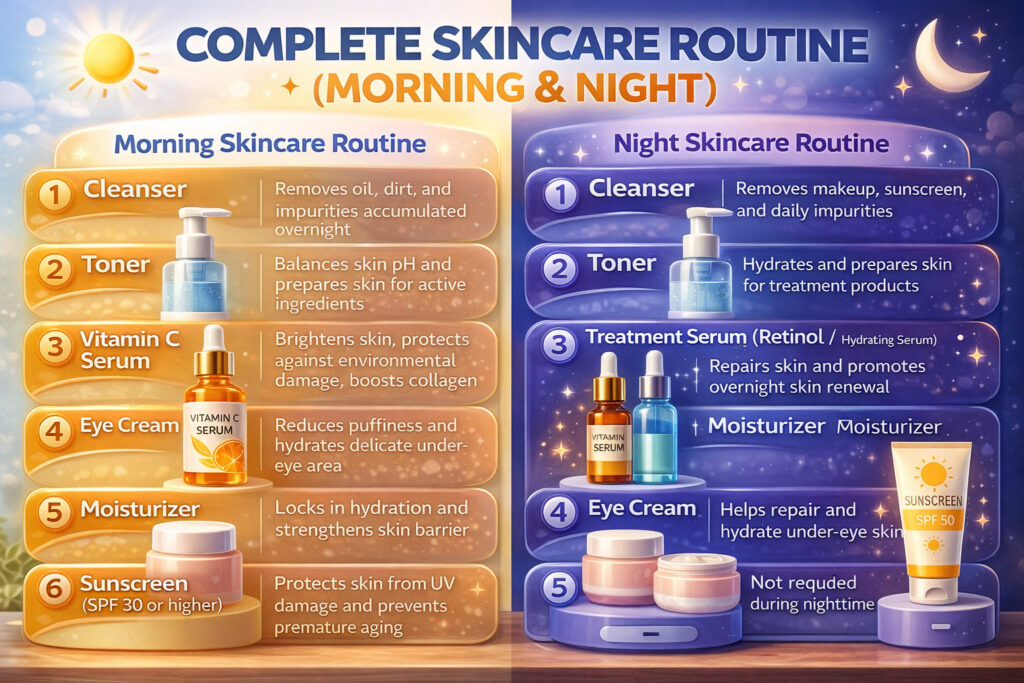
Complete Skincare Routine Order (Morning & Night)
| Step | Morning Skincare Routine | Purpose | Night Skincare Routine | Purpose |
|---|---|---|---|---|
| 1 | Cleanser | Removes oil, dirt, and impurities accumulated overnight | Cleanser | Removes makeup, sunscreen, and daily impurities |
| 2 | Toner | Balances skin pH and prepares skin for active ingredients | Toner | Hydrates and prepares skin for treatment products |
| 3 | Vitamin C Serum | Brightens skin, protects against environmental damage, boosts collagen | Treatment Serum (Retinol / Hydrating Serum) | Repairs skin and promotes overnight skin renewal |
| 4 | Eye Cream | Reduces puffiness and hydrates delicate under-eye area | Eye Cream | Helps repair and hydrate under-eye skin |
| 5 | Moisturizer | Locks in hydration and strengthens skin barrier | Moisturizer | Restores moisture and supports skin repair overnight |
| 6 | Sunscreen (SPF 30 or higher) | Protects skin from UV damage and prevents premature aging | — | Not required during nighttime |
Simple Skincare Layering Guide
| Order | Product Type | Example |
|---|---|---|
| 1 | Cleanse | Gentle face wash |
| 2 | Prep | Toner or essence |
| 3 | Treat | Vitamin C Brightening Serum |
| 4 | Hydrate | Moisturizer |
| 5 | Protect | Sunscreen (morning only) |
Pro Dermatologist Tip
Dermatologists often recommend using Vitamin C serum in the morning because it helps protect the skin from free radicals, pollution, and UV exposure throughout the day. When combined with sunscreen, vitamin C provides stronger protection against premature skin aging.
Common Mistakes When Using Vitamin C Serum
Many people do not see results from vitamin C serum simply because they are using it incorrectly. Avoiding these common mistakes can help you get the most out of your brightening serum.
Using Too Much Product
Vitamin C serum is highly concentrated, so using more does not make it work faster. Typically 2–3 drops are enough for the entire face.
Mixing With Harsh Ingredients
Using vitamin C together with strong exfoliating acids such as AHAs, BHAs, or benzoyl peroxide can irritate the skin. These ingredients may also reduce the stability of vitamin C.
Applying It on Wet Skin
Applying vitamin C serum on wet skin can sometimes increase irritation. It is best to apply it on dry skin after cleansing.
Ignoring Expiration or Oxidation
If your vitamin C serum turns dark orange or brown, it may have oxidized. Oxidized vitamin C loses its effectiveness and may irritate the skin.
Skipping Moisturizer
Vitamin C works best when the skin barrier is healthy. Always follow your serum with a moisturizer to lock in hydration.
Who Should NOT Use Vitamin C Serum?
Although vitamin C is generally safe for most skin types, there are certain situations where people should avoid or limit its use.
People With Extremely Sensitive Skin
Individuals with highly sensitive or reactive skin may experience redness, burning, or irritation when using strong L-Ascorbic Acid formulations.
Those With Active Skin Conditions
People suffering from severe skin conditions such as eczema, rosacea flare-ups, or open wounds should avoid vitamin C serum until the skin barrier heals.
People Using Strong Prescription Treatments
If you are using prescription medications like retinoids, isotretinoin, or strong chemical peels, consult a dermatologist before adding vitamin C to your routine.
Individuals Allergic to Vitamin C Derivatives
Although rare, some people may be allergic to certain vitamin C derivatives used in skincare formulations.
After Certain Cosmetic Procedures
After treatments like laser therapy, microneedling, or deep chemical peels, vitamin C serum may irritate freshly treated skin. Dermatologists usually recommend waiting until the skin fully heals.
Medical & Dermatology Disclaimer
The information provided in this article about Vitamin C Brightening Serum is intended for educational and informational purposes only. While vitamin C is widely used in dermatology and cosmetic skincare, individual skin types and conditions may react differently to skincare ingredients.
This content does not replace professional medical advice, diagnosis, or treatment from a licensed dermatologist, healthcare provider, or qualified skincare specialist. If you have a specific skin condition such as eczema, rosacea, severe acne, or allergic reactions, it is recommended that you consult a dermatologist before introducing new skincare products into your routine.
Patch Test Recommendation
Before applying any new skincare product, including Vitamin C serum, it is strongly recommended to perform a patch test. Apply a small amount of the product on a discreet area of skin, such as behind the ear or on the inner forearm, and wait 24 hours to check for possible irritation or allergic reactions.
If redness, itching, swelling, or irritation occurs, discontinue use immediately and consult a skincare professional.
Ingredient Transparency
Consumers should always review the ingredient list before purchasing or using skincare products. Different formulations of vitamin C serums may contain varying concentrations and derivatives such as:
- L-Ascorbic Acid
- Sodium Ascorbyl Phosphate
- Ascorbyl Glucoside
- Tetrahexyldecyl Ascorbate
Some formulations may also include additional ingredients like hyaluronic acid, niacinamide, or ferulic acid to improve stability and effectiveness.
Safe Usage Guidelines
For safe and effective use of Vitamin C brightening serum, consider the following recommendations:
- Use the product according to the manufacturer’s instructions.
- Avoid direct contact with the eyes.
- Store the product in a cool, dry place away from direct sunlight.
- Discontinue use if severe irritation occurs.
- Always apply broad-spectrum sunscreen when using brightening skincare products.
No Guaranteed Results Statement
Skincare results can vary depending on factors such as skin type, lifestyle, environmental exposure, and product formulation. While many users experience improvements in skin brightness, texture, and tone when using vitamin C serums consistently, results cannot be guaranteed for every individual.
Professional Recommendation
Dermatologists generally consider vitamin C to be a beneficial antioxidant ingredient for improving skin brightness and supporting collagen production. However, the effectiveness of a skincare product depends on proper formulation, concentration, stability, and consistent use.
Individuals with sensitive or reactive skin should start with lower concentrations and gradually increase usage as tolerated.
Conclusion
Vitamin C brightening serum has earned its reputation as one of the most powerful skincare ingredients available today. From brightening dull skin to fading dark spots and boosting collagen production, its benefits are backed by both scientific research and real-world results.
The growing global demand for vitamin C skincare products reflects a broader shift toward science-based skincare solutions. Instead of relying on temporary cosmetic fixes, consumers are now investing in ingredients that improve long-term skin health.
If you’re looking for a skincare product that truly transforms your complexion, a well-formulated vitamin C brightening serum is one of the best places to start.
FAQs
1. What does Vitamin C brightening serum do for the skin?
Vitamin C brightening serum helps improve skin radiance, reduce dark spots, and protect the skin from environmental damage. It works as a powerful antioxidant that neutralizes free radicals, boosts collagen production, and supports a more even skin tone. Regular use can help the skin appear brighter, smoother, and healthier.
2. How often should you use Vitamin C serum?
Most dermatologists recommend using vitamin C serum once daily, preferably in the morning. Applying it after cleansing and before moisturizer allows the active ingredients to penetrate the skin effectively. Consistent daily use can provide the best results over time.
3. Can Vitamin C serum remove dark spots?
Yes, vitamin C serum can help fade dark spots and hyperpigmentation over time. It works by slowing down melanin production in the skin, which gradually reduces the appearance of pigmentation, acne marks, and sun spots.
4. When should I apply Vitamin C serum in my skincare routine?
Vitamin C serum should be applied after cleansing and toning but before moisturizer. In a typical skincare routine, it is placed in the treatment step so it can penetrate the skin effectively.
5. Can Vitamin C serum be used with sunscreen?
Yes, vitamin C works best when used together with broad-spectrum sunscreen. While vitamin C protects the skin from oxidative stress, sunscreen protects it from UV damage. This combination helps prevent premature aging and pigmentation.
6. How long does Vitamin C serum take to work?
Most people begin noticing brighter and smoother skin within 3–4 weeks of regular use. However, fading dark spots and improving skin texture may take 6–8 weeks depending on skin type and product formulation.
7. Is Vitamin C serum suitable for all skin types?
Vitamin C serum is generally suitable for normal, dry, oily, and combination skin types. However, people with sensitive skin should start with a lower concentration (5–10%) to avoid irritation.
8. What ingredients work well with Vitamin C serum?
Vitamin C works well with ingredients like hyaluronic acid, vitamin E, ferulic acid, and niacinamide. These ingredients enhance hydration, improve antioxidant protection, and help stabilize vitamin C for better results.
9. Can Vitamin C serum help reduce wrinkles?
Yes, vitamin C helps stimulate collagen production, which can improve skin elasticity and reduce the appearance of fine lines and wrinkles over time.
10. What should you avoid when using Vitamin C serum?
Avoid combining vitamin C with strong exfoliating acids or benzoyl peroxide unless recommended by a dermatologist. These ingredients can sometimes cause irritation or reduce the stability of vitamin C.
People Also Ask
1. What are the benefits of Vitamin C serum for the face?
Vitamin C serum helps brighten the skin, reduce dark spots, and improve overall skin tone. It works as a powerful antioxidant that protects the skin from environmental damage caused by pollution and UV exposure. Regular use can also boost collagen production, making the skin appear firmer, smoother, and more youthful.
2. How often should I use Vitamin C serum?
Most dermatologists recommend using vitamin C serum once daily, usually in the morning. Applying it regularly helps the skin maintain antioxidant protection throughout the day. Beginners can start by using it 3–4 times per week and gradually increase to daily use as the skin becomes accustomed to the ingredient.
3. Can Vitamin C serum remove dark spots?
Vitamin C serum can help fade dark spots and hyperpigmentation over time. It works by slowing melanin production in the skin, which reduces pigmentation caused by sun exposure, acne scars, and aging. With consistent use, the skin tone gradually becomes brighter and more even.
4. Is Vitamin C serum good for glowing skin?
Yes, vitamin C serum is widely known for improving skin radiance. It helps remove dullness, supports healthy skin cell renewal, and protects the skin from oxidative damage. With regular use, the complexion becomes brighter, smoother, and naturally glowing.
5. When should I apply Vitamin C serum in my skincare routine?
Vitamin C serum should be applied after cleansing and toning but before moisturizer. This allows the active ingredients to penetrate the skin more effectively. In a typical morning skincare routine, the order is: cleanser, toner, vitamin C serum, moisturizer, and sunscreen.
6. Can I use Vitamin C serum every day?
Yes, vitamin C serum is generally safe for daily use. Using it consistently can help maintain brighter skin and improve overall skin health. However, individuals with sensitive skin may prefer using it every other day to avoid irritation.
7. What percentage of Vitamin C serum is best for beginners?
Beginners should start with a 5%–10% concentration of vitamin C. Lower concentrations are gentler on the skin and allow it to adapt gradually. Once the skin becomes tolerant, higher concentrations such as 15%–20% may provide stronger brightening and anti-aging benefits.
8. How long does it take for Vitamin C serum to work?
Visible results from vitamin C serum usually appear within 3–4 weeks of regular use. Skin may start looking brighter and smoother during this time. Improvements in pigmentation, acne marks, and fine lines typically become more noticeable after 6–8 weeks.
9. Should Vitamin C serum be used in the morning or night?
Vitamin C serum is most commonly used in the morning skincare routine. During the day, it helps protect the skin from environmental stressors such as pollution and UV exposure. However, it can also be used at night depending on individual skincare routines.
10. Can Vitamin C serum be used with niacinamide?
Yes, vitamin C and niacinamide can be used together in a skincare routine. These ingredients complement each other by improving skin brightness, strengthening the skin barrier, and reducing redness or uneven tone. Many modern skincare formulations combine these ingredients safely.
11. Is Vitamin C serum suitable for sensitive skin?
Vitamin C serum can be suitable for sensitive skin if used in lower concentrations and gentle formulations. Individuals with sensitive skin should choose stable vitamin C derivatives and perform a patch test before applying it to the entire face.
12. Does Vitamin C serum help with acne scars?
Yes, vitamin C serum may help reduce the appearance of post-acne marks and scars. It works by promoting collagen production and slowing melanin formation, which gradually fades discoloration left behind after acne breakouts.
13. What should I apply after Vitamin C serum?
After applying vitamin C serum, it is recommended to use a moisturizer to lock in hydration and strengthen the skin barrier. During the daytime, the final step should always be broad-spectrum sunscreen to protect the skin from UV damage.
14. Can Vitamin C serum lighten skin?
Vitamin C serum does not bleach the skin but helps brighten the complexion and improve uneven skin tone. It works by reducing pigmentation and enhancing skin radiance, which makes the skin appear clearer and more luminous.
15. Is Vitamin C serum good for oily skin?
Yes, vitamin C serum can be beneficial for oily skin types. It helps reduce inflammation, improve skin texture, and support balanced oil production. Lightweight, water-based formulations are usually the best option for oily or acne-prone skin.
16. What ingredients should not be mixed with Vitamin C?
Some strong skincare ingredients, such as benzoyl peroxide and high-strength exfoliating acids, may reduce the stability of vitamin C or increase irritation when used at the same time. It is often recommended to use these ingredients in separate routines.
17. Can Vitamin C serum reduce wrinkles?
Vitamin C supports collagen production, which helps maintain skin firmness and elasticity. Over time, this process can reduce the appearance of fine lines and wrinkles while improving the overall texture and smoothness of the skin.
18. How many drops of Vitamin C serum should I use?
Usually 2–3 drops of vitamin C serum are enough for the entire face. Using too much product does not increase effectiveness and may cause irritation. Applying a small amount evenly across the skin is typically sufficient.
19. Does Vitamin C serum expire or oxidize?
Yes, vitamin C serum can oxidize when exposed to air, light, or heat. When oxidation occurs, the serum may change color from clear to dark orange or brown. Oxidized vitamin C may lose its effectiveness and should not be used.
20. Can Vitamin C serum be used with sunscreen?
Yes, vitamin C serum works very well when used with sunscreen. While vitamin C protects the skin from oxidative stress, sunscreen protects against UV radiation. Together they help prevent premature aging and maintain healthy skin.