
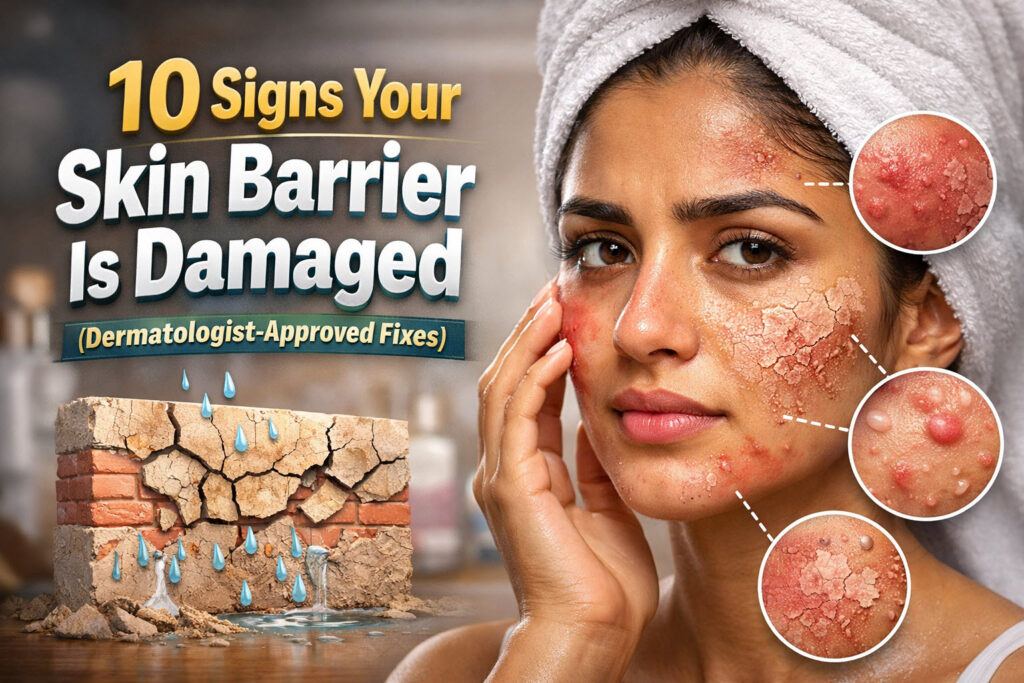
Healthy, glowing skin depends heavily on a strong skin barrier, but many people unknowingly damage this protective layer through harsh skincare routines, over-exfoliation, and environmental stress. The skin barrier, also known as the stratum corneum, acts as your skin’s natural shield that locks in moisture while protecting against pollution, bacteria, UV rays, and harmful irritants. When this barrier becomes compromised, your skin may begin to show clear warning signs such as dryness, redness, sensitivity, breakouts, and irritation. Understanding these symptoms early can help you repair your skin faster and prevent long-term damage.
In this complete skincare guide, we reveal the 10 most common signs your skin barrier is damaged, based on dermatologist insights and modern skincare science. If your skin suddenly feels tight, itchy, flaky, or unusually sensitive, it could indicate that your skin’s protective barrier is weakened. Many skincare enthusiasts unknowingly worsen the condition by using strong ingredients like retinol, exfoliating acids (AHA/BHA), and harsh cleansers, which can strip the skin of essential lipids such as ceramides, fatty acids, and cholesterol. Once the barrier becomes damaged, the skin struggles to retain hydration and becomes more vulnerable to environmental damage.
This article explains how to identify skin barrier damage symptoms, why it happens, and the best dermatologist-approved ways to repair the skin barrier naturally. You will also learn about barrier-repair skincare ingredients such as ceramides, hyaluronic acid, niacinamide, panthenol, and squalane, which help restore moisture and strengthen the skin’s natural defense system. Whether you are dealing with sensitive skin, acne, redness, dehydration, or irritation, repairing your skin barrier can dramatically improve your overall skin health and restore your natural glow.
If you want healthier, smoother, and stronger skin, understanding the warning signs of a damaged skin barrier is the first step. This guide will help you build a simple skincare routine to repair and protect your skin barrier, allowing your skin to heal and function properly again.
Table of Contents
Introduction
Healthy skin isn’t just about looking smooth or glowing—it’s about having a strong skin barrier. This protective layer, known scientifically as the stratum corneum, acts like a shield that keeps moisture inside your skin while blocking harmful irritants, pollution, and bacteria. When this barrier is functioning properly, your skin stays hydrated, balanced, and resilient. But when it becomes damaged, things can quickly spiral into dryness, irritation, breakouts, and sensitivity. Dermatologists often describe the skin barrier as a brick-and-mortar structure, where skin cells act as bricks and lipids act as mortar holding everything together. Once this structure weakens, the skin begins to lose moisture and becomes vulnerable to environmental stressors.
Many people unknowingly damage their skin barrier through over-exfoliation, harsh skincare products, excessive cleansing, or environmental stress like pollution and UV exposure. Modern skincare trends often encourage people to use strong active ingredients such as acids and retinoids, which can be beneficial when used correctly but harmful when overused. The problem is that most people only realize their barrier is compromised once the symptoms become obvious. Your skin might suddenly feel dry, tight, irritated, or more sensitive than usual.
Recognizing the warning signs early can help prevent long-term skin issues. Dermatologists emphasize that identifying these symptoms quickly allows you to adjust your routine and give your skin the time it needs to heal. Below are the 10 most common signs your skin barrier may be damaged and what they reveal about your skin’s health.
What Is the Skin Barrier and Why It Matters
Understanding the Role of the Skin Barrier
The skin barrier is the outermost layer of your skin and serves as your body’s first line of defense against environmental threats. Think of it like a protective wall that separates your internal body from the outside world. Its main job is to prevent water loss while blocking irritants, allergens, bacteria, and pollutants from entering the skin. When the barrier is intact, your skin maintains proper hydration levels and appears smooth, soft, and healthy.
However, when the barrier becomes compromised, it can no longer perform its protective functions effectively. Moisture escapes from the skin through a process called transepidermal water loss (TEWL), which leads to dryness and dehydration. At the same time, harmful substances can penetrate the skin more easily, triggering irritation and inflammation.
A damaged barrier also disrupts the skin’s natural microbiome, which is the ecosystem of beneficial bacteria living on your skin. When this balance is disturbed, skin conditions such as acne, eczema, and dermatitis may become more likely. In simple terms, the skin barrier acts as the foundation of skin health—when it’s strong, everything else works better.
How the Skin Barrier Protects Your Skin
Your skin barrier doesn’t just sit there passively—it constantly works to maintain balance. It regulates hydration, protects against pathogens, and helps maintain the skin’s natural pH level. Lipids such as ceramides, cholesterol, and fatty acids play a major role in keeping the barrier intact. These lipids function like glue, binding skin cells together so the surface remains smooth and protected.
When the barrier is damaged, this lipid structure becomes disrupted. The skin starts losing moisture rapidly, and irritants can easily penetrate deeper layers. As a result, your skin becomes more reactive and vulnerable to environmental stress. Over time, this can lead to visible signs like redness, flaking, breakouts, and uneven texture.
Interestingly, dermatologists often say that a healthy skin barrier is the secret behind glowing skin. Many skincare issues—whether dryness, acne, or sensitivity—can be traced back to a compromised barrier. Understanding how it works is the first step toward recognizing when something isn’t right.
What Causes Skin Barrier Damage
Common Skincare Mistakes That Harm the Barrier
Ironically, many people damage their skin barrier while trying to improve their skin. The biggest culprit is over-exfoliation. Chemical exfoliants like AHAs, BHAs, and retinoids can deliver great results, but when used too frequently, they strip away the protective lipid layer that keeps skin healthy. Dermatology studies suggest that excessive exfoliation can significantly increase redness and irritation, especially for sensitive skin types.
Another common mistake is using too many active ingredients at once. Layering products containing acids, retinol, vitamin C, and exfoliating toners might sound like a powerful skincare routine, but it can overwhelm your skin. The barrier needs time to recover between treatments, and constant exposure to strong ingredients can weaken it.
Over-cleansing is another overlooked issue. Washing your face multiple times a day or using harsh foaming cleansers can strip away natural oils that help maintain the barrier. Without these oils, the skin becomes dry, tight, and irritated. Even hot water can damage the barrier by dissolving the lipids that hold skin cells together.
Environmental Factors That Weaken the Skin Barrier
Your skincare routine isn’t the only thing affecting your barrier. Environmental factors also play a significant role. Exposure to UV radiation, pollution, wind, and extreme temperatures can gradually weaken the skin’s protective layer. Over time, these stressors break down collagen and disrupt the lipid structure of the barrier.
Lifestyle habits can also influence skin barrier health. Poor diet, lack of sleep, chronic stress, and dehydration can impair the skin’s ability to repair itself. Aging is another factor. Research shows that by age 50, the skin naturally produces about 50% fewer ceramides, which are essential lipids responsible for maintaining barrier strength.
Because so many factors contribute to barrier damage, it’s important to pay attention to early warning signs. Your skin often sends signals when something isn’t right—you just need to know how to recognize them.
10 Signs Your Skin Barrier Is Damaged
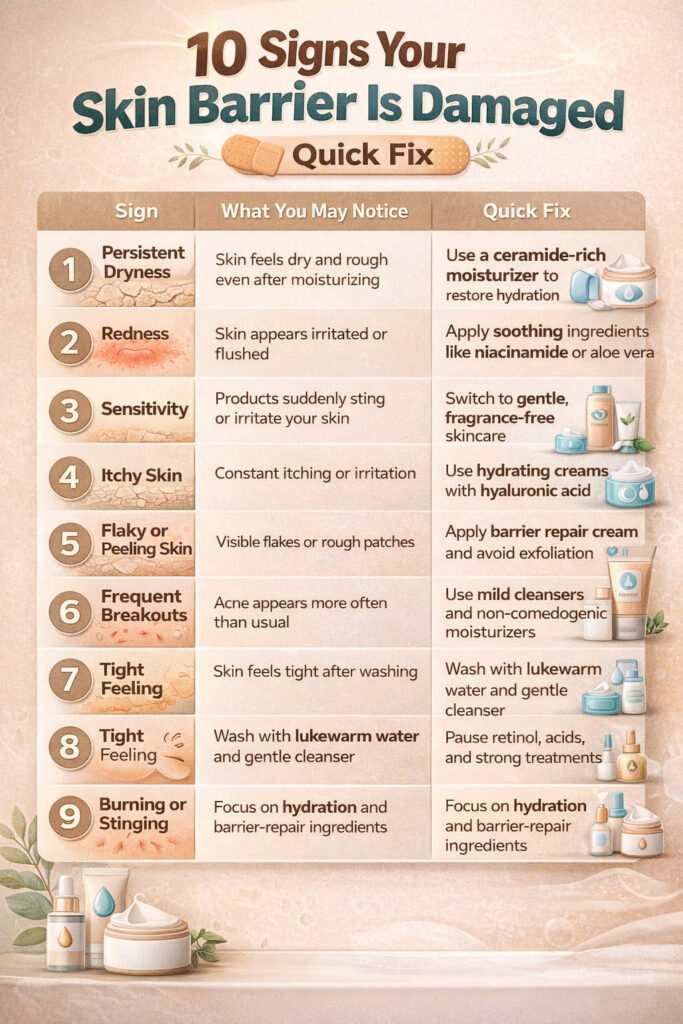
| # | Sign of Damaged Skin Barrier | What It Means | Why It Happens |
|---|---|---|---|
| 1 | Persistent Dryness | Skin feels constantly dry even after moisturizing. | The barrier cannot retain moisture due to lipid damage. |
| 2 | Redness and Inflammation | Skin appears red, irritated, or inflamed. | Irritants easily penetrate when the barrier is weakened. |
| 3 | Increased Skin Sensitivity | Products that were once gentle now cause irritation. | The protective layer becomes thin and reactive. |
| 4 | Itching or Irritation | Skin feels itchy, uncomfortable, or irritated throughout the day. | Nerve endings become more exposed due to barrier damage. |
| 5 | Flaky or Peeling Skin | Visible flakes or rough patches appear on the skin. | The skin loses hydration and cannot maintain smooth cell turnover. |
| 6 | Frequent Breakouts | Acne or pimples appear more often than usual. | A compromised barrier disrupts the skin microbiome. |
| 7 | Tight Skin Feeling | Skin feels tight especially after cleansing. | Natural oils and moisture escape quickly from the skin. |
| 8 | Burning or Stinging Sensation | Skincare products cause burning or tingling. | Damaged skin allows ingredients to penetrate deeper layers. |
| 9 | Dull or Uneven Skin Tone | Skin loses its natural glow and appears tired. | Dehydration prevents light from reflecting evenly. |
| 10 | Fine Lines Appear More Visible | Wrinkles or lines look more noticeable suddenly. | Dehydrated skin makes fine lines more pronounced. |
Dermatologist Recommended Skin Barrier Repair Routine
| Step | Morning Routine | Purpose | Night Routine | Purpose |
|---|---|---|---|---|
| 1 | Gentle Hydrating Cleanser | Removes dirt without stripping natural oils | Gentle Cleanser | Cleanses skin and prepares it for repair products |
| 2 | Hydrating Toner or Essence | Restores moisture and balances skin pH | Hydrating Toner | Rehydrates skin after cleansing |
| 3 | Barrier Repair Serum (Niacinamide / Hyaluronic Acid) | Strengthens the skin barrier and boosts hydration | Repair Serum (Panthenol / Ceramides) | Helps repair and calm damaged skin overnight |
| 4 | Moisturizer with Ceramides | Locks in hydration and rebuilds lipid barrier | Rich Barrier Repair Moisturizer | Deeply nourishes and restores skin overnight |
| 5 | Broad Spectrum Sunscreen (SPF 30+) | Protects skin barrier from UV damage | Optional: Facial Oil or Sleeping Mask | Provides extra nourishment and hydration |
Dermatologist Tips for Skin Barrier Recovery
- Use fragrance-free and alcohol-free skincare products.
- Avoid over-exfoliation, harsh scrubs, and strong acids while your skin heals.
- Choose products containing ceramides, hyaluronic acid, niacinamide, panthenol, and squalane.
- Wash your face with lukewarm water instead of hot water.
- Keep your routine simple and consistent for at least 2–4 weeks to allow the skin barrier to repair.
Key Ingredients Dermatologists Recommend
| Ingredient | Benefit for Skin Barrier |
|---|---|
| Ceramides | Restore the protective lipid barrier |
| Hyaluronic Acid | Deep hydration and moisture retention |
| Niacinamide | Reduces redness and strengthens barrier |
| Panthenol (Vitamin B5) | Soothes irritation and supports healing |
| Squalane | Mimics natural skin oils and improves hydration |
These ingredients help rebuild the lipid structure that holds skin cells together, gradually restoring the barrier’s protective function.
Simple Routine to Heal the Skin Barrier
When your barrier is damaged, less is often more. Dermatologists frequently recommend simplifying your routine to three essential steps:
- Gentle cleanser – Avoid harsh foaming formulas.
- Barrier-repair moisturizer – Use products rich in ceramides and fatty acids.
- Broad-spectrum sunscreen – Protect the skin from further damage.
Consistency is key. Depending on the severity of the damage, healing may take anywhere from a few weeks to several months.
Dermatologist Tips to Protect and Repair Your Skin Barrier
Dermatologists consistently emphasize that repairing the skin barrier requires patience, simplicity, and the right ingredients. Many people try to fix damaged skin by adding more products, but experts recommend the opposite approach—simplify your routine and focus on barrier-repair ingredients.
One of the most important tips dermatologists give is to use a gentle cleanser that does not strip natural oils from the skin. Harsh foaming cleansers or products containing strong sulfates can weaken the skin barrier by removing essential lipids. Instead, dermatologists recommend hydrating cleansers with mild surfactants that cleanse the skin without disrupting its natural balance.
Another important recommendation is to focus on barrier-repair ingredients. Dermatologists frequently suggest products containing ceramides, hyaluronic acid, niacinamide, panthenol, and squalane because these ingredients help restore moisture and rebuild the skin’s protective structure. Ceramides, in particular, are essential lipids that act like the “cement” holding skin cells together.
Dermatologists also advise people to avoid over-exfoliating. Exfoliating acids such as AHAs and BHAs can improve skin texture when used correctly, but excessive use can thin the protective layer of the skin. Experts recommend exfoliating only one or two times per week, especially if your skin is sensitive.
Sun protection is another critical factor in skin barrier health. UV rays weaken the barrier and accelerate skin damage. Dermatologists strongly recommend applying broad-spectrum sunscreen with SPF 30 or higher every day—even when indoors or on cloudy days.
Finally, dermatologists stress the importance of consistency and patience. Skin barrier repair does not happen overnight. Depending on the severity of the damage, it can take two to six weeks for the skin to fully restore its natural defense system.
Common Mistakes That Damage the Skin Barrier
Many people unknowingly harm their skin barrier through everyday skincare habits. These mistakes often happen because of misleading skincare trends or excessive product use.
One of the most common mistakes is over-exfoliation. Using exfoliating scrubs, chemical peels, and acids too frequently can strip the skin of essential lipids. While exfoliation helps remove dead skin cells, excessive exfoliation weakens the protective barrier and leads to irritation, redness, and sensitivity.
Another frequent mistake is using too many active ingredients at the same time. Combining powerful ingredients such as retinol, vitamin C, AHAs, BHAs, and benzoyl peroxide can overwhelm the skin. Instead of improving skin health, this combination often leads to inflammation and barrier damage.
Over-cleansing is also a major contributor to skin barrier issues. Washing your face multiple times a day or using harsh cleansers removes the natural oils that help maintain the skin’s protective layer. Dermatologists recommend cleansing the face twice daily—once in the morning and once before bed.
Hot water is another hidden culprit. Many people enjoy washing their face with hot water, but this can dissolve the lipids that protect the skin. Using lukewarm water is much safer and helps preserve the skin barrier.
Skipping moisturizer is also a common mistake. Some people avoid moisturizers because they believe they cause breakouts, but hydration is essential for maintaining the skin barrier. Without proper hydration, the skin becomes dry, tight, and vulnerable to irritation.
Who Should NOT Use Strong Barrier-Repair Treatments?
Although repairing the skin barrier is beneficial for most people, certain individuals should be cautious when using strong skincare treatments or active ingredients.
People with extremely sensitive skin should avoid high concentrations of active ingredients such as retinol, exfoliating acids, and chemical peels. These treatments can further irritate already weakened skin and delay the healing process. Instead, individuals with sensitive skin should focus on minimalist skincare routines with soothing ingredients.
Those who suffer from severe skin conditions such as eczema, rosacea, or dermatitis should also consult a dermatologist before trying new skincare treatments. These conditions often involve a compromised skin barrier, and using the wrong products can worsen inflammation and discomfort.
Pregnant or breastfeeding individuals should be cautious with certain skincare ingredients as well. Dermatologists often recommend avoiding strong retinoids or high-dose exfoliating treatments during pregnancy because they may cause skin irritation and are not always considered safe during this period.
People undergoing dermatological procedures such as chemical peels, laser treatments, or microneedling should avoid using active ingredients until their skin fully recovers. After these procedures, the skin barrier is temporarily weakened, so gentle hydration and sun protection are the safest options.
Finally, individuals with active skin infections or severe acne inflammation should avoid experimenting with multiple skincare treatments at once. In these situations, it is always best to follow professional dermatological advice to prevent further skin damage.
Medical Disclaimer
The information provided in this article is intended for educational and informational purposes only and should not be considered medical advice. Skincare conditions can vary widely depending on skin type, lifestyle, and underlying health factors. The tips and recommendations discussed here are based on general dermatology guidance and skincare research.
If you experience severe skin irritation, allergic reactions, persistent acne, eczema, rosacea, or other skin concerns, it is strongly recommended that you consult a qualified dermatologist or healthcare professional before starting any new skincare routine or treatment.
This content is not intended to diagnose, treat, cure, or prevent any medical condition. Individual results may vary depending on skin type, product ingredients, and environmental factors.
Responsible Skincare Advice
To ensure safe skincare practices, readers should keep the following guidelines in mind:
- Always perform a patch test before using new skincare products.
- Avoid combining multiple strong active ingredients without professional guidance.
- Follow product instructions and avoid overusing exfoliating acids or retinoids.
- Use broad-spectrum sunscreen daily to protect your skin barrier.
- Introduce new skincare products gradually to reduce irritation risk.
These precautions help reduce the likelihood of skin sensitivity, irritation, or barrier damage.
Evidence-Based Skincare Information
The skincare advice in this article is based on widely accepted dermatology practices and cosmetic science research related to:
- Skin barrier function and repair
- Hydration and moisture retention
- Barrier-repair ingredients such as ceramides, hyaluronic acid, niacinamide, and panthenol
However, skincare products and ingredients may work differently for each individual depending on skin type, sensitivity, and personal skincare routine.
Transparency and Content Integrity
At Kmatee Skincare Solutions, our goal is to provide accurate, trustworthy, and reader-focused skincare education. Any product mentions or ingredient recommendations are intended to help readers make informed skincare decisions.
We aim to ensure our content is:
- Accurate and research-based
- Transparent and unbiased
- Helpful for readers seeking skincare guidance
Author Credibility Statement
This article is written and reviewed for educational skincare purposes and aims to provide readers with clear, easy-to-understand skincare guidance. Readers are encouraged to seek professional dermatological advice for personalized treatment recommendations.
Conclusion
Your skin barrier plays a critical role in maintaining healthy, resilient skin. When it’s functioning properly, your skin retains moisture, resists irritation, and maintains a smooth, glowing appearance. But when this protective layer becomes damaged, a wide range of symptoms can appear—from dryness and redness to breakouts and sensitivity.
Recognizing the 10 signs of a damaged skin barrier allows you to take action early before the problem worsens. The key to recovery is simplicity: gentle cleansing, barrier-supporting moisturizers, and consistent sun protection. With patience and the right skincare approach, your skin can rebuild its natural defenses and return to its healthy balance.
FAQs
1. How do I know if my skin barrier is damaged?
A damaged skin barrier often shows symptoms such as persistent dryness, redness, irritation, sensitivity, flaking, and breakouts. Your skin may also feel tight after cleansing or sting when applying skincare products. These signs indicate the protective layer of your skin is weakened and unable to retain moisture properly.
2. What causes skin barrier damage?
Skin barrier damage is commonly caused by over-exfoliation, harsh skincare products, excessive cleansing, UV exposure, pollution, and dehydration. Using strong ingredients like retinol, AHAs, and BHAs too frequently can also weaken the skin’s natural protective layer.
3. How long does it take to repair a damaged skin barrier?
A mildly damaged skin barrier typically takes 2 to 4 weeks to recover with proper skincare. Severe barrier damage may take 4 to 8 weeks depending on skin type, lifestyle, and the products used to repair and protect the skin.
4. What ingredients help repair the skin barrier?
Dermatologists recommend ingredients such as ceramides, hyaluronic acid, niacinamide, panthenol, and squalane for repairing the skin barrier. These ingredients help restore hydration, strengthen the lipid layer, and protect the skin from environmental damage.
5. Can over-exfoliation damage the skin barrier?
Yes, over-exfoliation is one of the most common causes of skin barrier damage. Frequent use of chemical exfoliants like AHAs, BHAs, and scrubs can strip away essential lipids, leading to dryness, irritation, redness, and increased skin sensitivity.
6. Should I stop using active ingredients if my skin barrier is damaged?
Yes, dermatologists often recommend pausing strong active ingredients such as retinol, exfoliating acids, and strong treatments when the skin barrier is damaged. Focus on gentle cleansing, hydration, and barrier-repair ingredients until the skin heals.
7. Can a damaged skin barrier cause acne?
Yes, a damaged skin barrier can disrupt the skin microbiome and increase inflammation, which may lead to acne breakouts. When the barrier is weakened, bacteria and irritants can penetrate the skin more easily.
8. What skincare routine helps repair a damaged skin barrier?
A simple skincare routine works best. Dermatologists recommend gentle cleansing, hydrating serums, barrier-repair moisturizers, and daily sunscreen. Avoid harsh exfoliants and strong treatments until the skin barrier has fully recovered.
9. Can oily skin have a damaged skin barrier?
Yes, oily skin can still experience barrier damage. When the skin barrier is weakened, the skin may produce even more oil to compensate for moisture loss, which can lead to clogged pores and breakouts.
10. What is the fastest way to repair a damaged skin barrier?
The fastest way to repair a damaged skin barrier is to simplify your skincare routine. Use a gentle cleanser, apply a ceramide-rich moisturizer, avoid strong actives, and protect your skin with sunscreen. Consistent hydration and barrier-supporting ingredients help the skin recover faster.
People Also Ask
1. What are the first signs of a damaged skin barrier?
The earliest signs of a damaged skin barrier include dryness, redness, irritation, and increased sensitivity. Your skin may also feel tight after washing or sting when applying skincare products. These symptoms indicate the skin’s protective layer is weakened and struggling to retain moisture.
2. How can I tell if my skin barrier is broken?
A broken skin barrier often causes flaky skin, redness, itching, burning sensations, and frequent breakouts. You may also notice that products you previously used without problems now cause irritation or stinging.
3. What causes skin barrier damage the most?
The most common causes include over-exfoliation, harsh cleansers, excessive use of retinol or acids, sun exposure, pollution, and dehydration. Using too many active ingredients at once can also weaken the skin’s protective layer.
4. How long does it take for the skin barrier to heal?
A damaged skin barrier usually takes two to four weeks to repair with proper care. Severe damage may take four to eight weeks, depending on skincare habits, hydration, and environmental factors.
5. What ingredients repair the skin barrier?
Dermatologists recommend ceramides, hyaluronic acid, niacinamide, panthenol, and squalane. These ingredients restore hydration, strengthen the skin’s lipid barrier, and help the skin recover from damage.
6. Can over-exfoliating damage the skin barrier?
Yes, over-exfoliating is one of the most common reasons for barrier damage. Frequent use of scrubs, AHAs, BHAs, or strong chemical peels can strip the skin of essential oils and lipids, leading to irritation and sensitivity.
7. Does a damaged skin barrier cause acne?
Yes. When the skin barrier is weakened, bacteria and irritants can penetrate more easily. This can lead to inflammation, clogged pores, and acne breakouts.
8. Should I stop using retinol if my skin barrier is damaged?
Yes. Dermatologists recommend pausing retinol and strong active ingredients until the skin barrier heals. Using them while the barrier is compromised can worsen irritation and delay recovery.
9. Can oily skin still have a damaged skin barrier?
Yes. Even oily skin can suffer from barrier damage. When the skin barrier is weakened, the skin may produce more oil to compensate for moisture loss, which can increase the risk of breakouts.
10. What skincare routine repairs a damaged skin barrier?
A simple routine works best. Dermatologists suggest using a gentle cleanser, hydrating serum, barrier-repair moisturizer, and sunscreen while avoiding strong actives like retinol or exfoliating acids.
11. Can sunscreen help protect the skin barrier?
Yes. Daily sunscreen protects the skin barrier from UV damage, inflammation, and premature aging. Dermatologists recommend using a broad-spectrum sunscreen with SPF 30 or higher.
12. Is dryness always a sign of a damaged skin barrier?
Not always, but persistent dryness that does not improve with moisturizer may indicate barrier damage or dehydration. It usually occurs when the skin loses its ability to retain moisture.
13. Can a damaged skin barrier cause redness?
Yes. Redness is a common symptom of a weakened barrier. When the protective layer is compromised, the skin becomes more sensitive to irritants and environmental stressors.
14. What foods help repair the skin barrier?
Foods rich in omega-3 fatty acids, antioxidants, and vitamins can support skin health. Examples include salmon, nuts, seeds, avocados, and leafy vegetables.
15. Can dehydration damage the skin barrier?
Yes. Lack of hydration can weaken the skin barrier and increase transepidermal water loss (TEWL), which leads to dryness, irritation, and sensitivity.
16. What should I avoid when my skin barrier is damaged?
Avoid harsh cleansers, alcohol-based products, scrubs, strong acids, retinol, and excessive exfoliation. These can further weaken the barrier and delay healing.
17. How do dermatologists recommend repairing the skin barrier?
Dermatologists recommend simplifying your skincare routine, using barrier-repair ingredients, staying hydrated, and protecting the skin from sun exposure.
18. Can hot water damage the skin barrier?
Yes. Washing your face with very hot water can strip the skin of natural oils and lipids, weakening the skin barrier. Dermatologists recommend using lukewarm water instead.
19. Is sensitive skin related to a damaged skin barrier?
Often yes. When the skin barrier is compromised, the skin becomes more reactive and sensitive to skincare products, weather changes, and environmental irritants.
20. What is the fastest way to repair the skin barrier?
The fastest way is to simplify your skincare routine, focus on hydration, use ceramide-based moisturizers, avoid harsh treatments, and apply sunscreen daily. Consistency is key for healing.